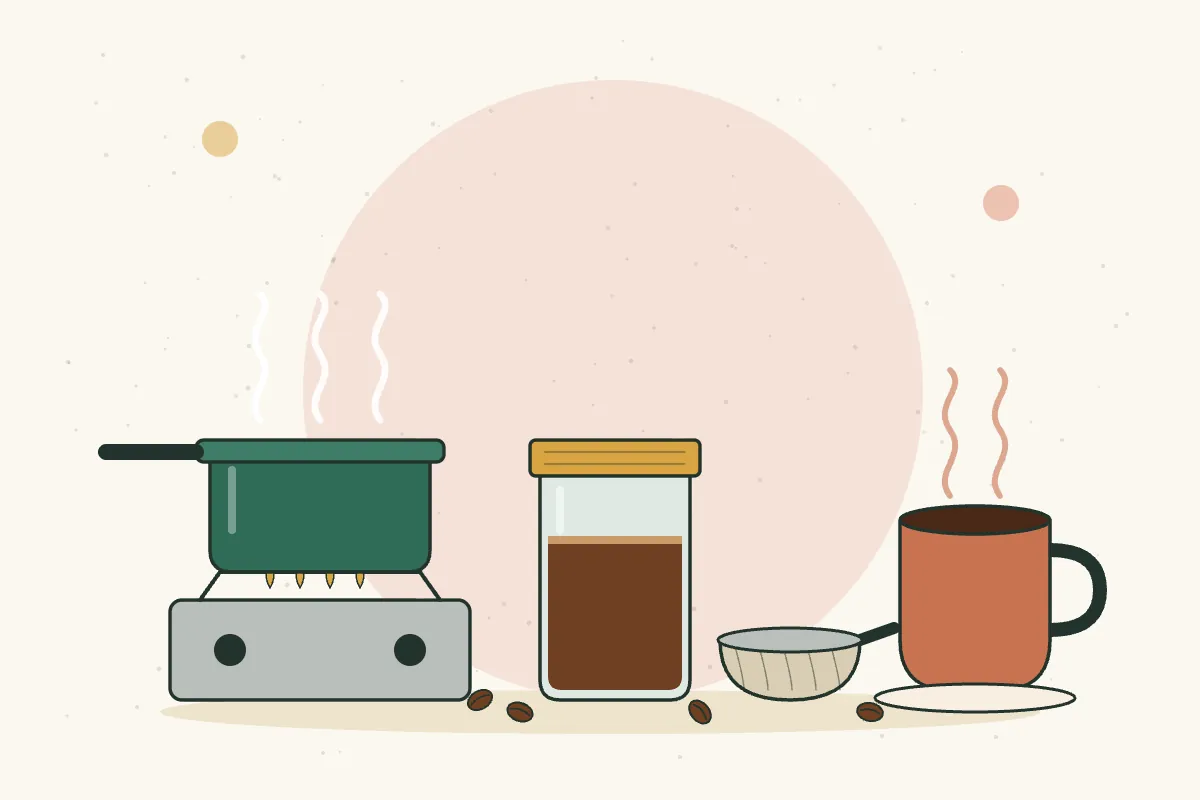
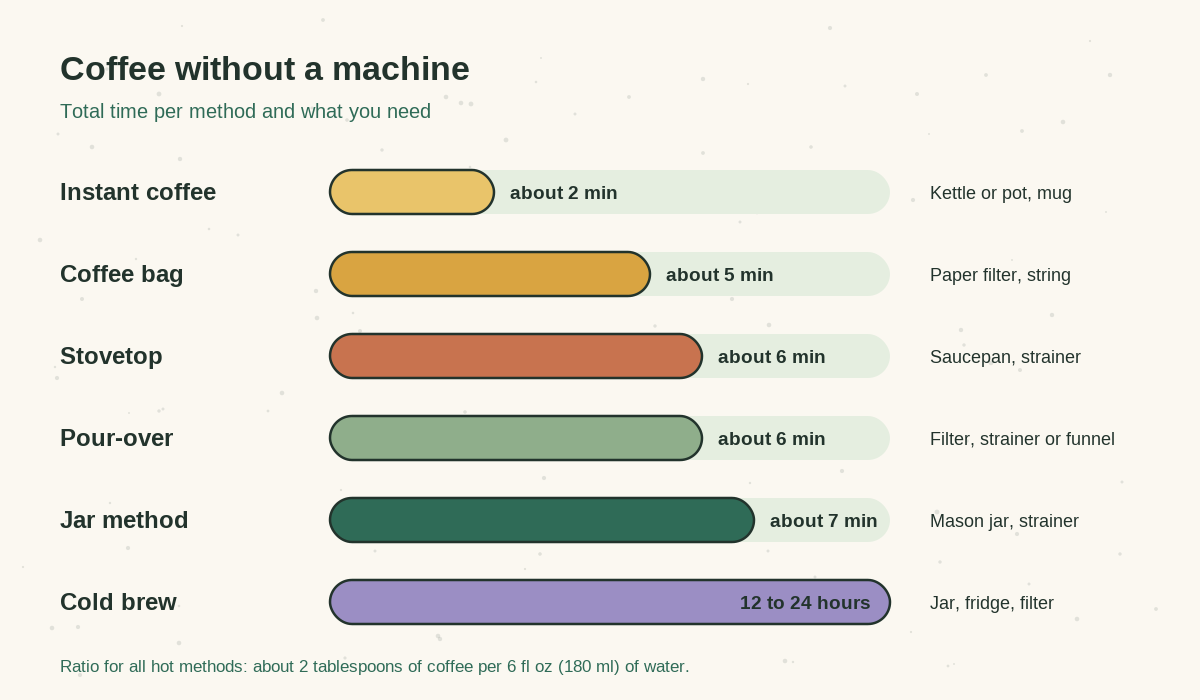
You do not need a machine to make good coffee. All brewing comes down to three things: hot water, ground coffee and a way to separate the two. A saucepan, a mason jar, a fine strainer or even a mug will do the job. Below are six methods, from a quick stovetop cup to overnight cold brew, with the ratios that make them taste right.
The short version
- Use about 2 tablespoons of ground coffee per 6 fl oz (180 ml) of water, then adjust to taste.
- Water just off the boil, around 195 to 205°F (90 to 96°C), extracts the best flavor.
- Steep 4 minutes for most methods, then strain or let the grounds settle.
- Paper filters trap oils that can raise LDL cholesterol, so filtered methods are the better daily habit.
The basics: ratio, water and grind
The coffee industry's classic guideline is about 2 level tablespoons of ground coffee for every 6 fl oz (180 ml) of water. In weight, that is roughly 1 part coffee to 15 to 17 parts water. Start there and add more coffee if it tastes thin, more water if it tastes harsh.
Bring water to a boil, then let it sit for about 30 seconds. That drops it into the ideal range without a thermometer. Boiling water poured straight onto grounds tends to taste bitter.
For steeping methods (stovetop, jar, mug) a medium to coarse grind works best, because it is easier to strain. If you only have whole beans and no grinder, pulse them in short bursts in a blender, or put them in a zip-top bag and crush them with a rolling pin or the bottom of a heavy pan.
6 ways to make coffee without a coffee maker
1. Stovetop or "cowboy" coffee
- Heat the water. Bring water to a boil in a saucepan, then take it off the heat for 30 seconds.
- Add coffee. Stir in the grounds, using the ratio above.
- Steep. Cover and wait 4 minutes. Stir once halfway.
- Settle the grounds. Sprinkle a tablespoon of cold water over the surface. It helps the grounds sink.
- Pour slowly. Ladle or pour gently into mugs, leaving the last bit with the sludge in the pan. Pour through a fine strainer if you have one.
2. Makeshift pour-over
Set a paper coffee filter in a fine mesh strainer or a funnel over a mug. Add the grounds, pour a little hot water to wet them and wait 30 seconds, then pour the rest slowly in circles. This gives a clean, bright cup. If you are out of filters, a plain, unprinted paper towel works in a pinch, but it can add a papery taste and tears easily.
3. The jar "French press"
Put grounds in a heatproof mason jar, add hot water, stir and cover. After 4 minutes, pour through a fine strainer lined with a paper filter or a clean cloth napkin. This is the easiest way to make several cups at once.
4. Coffee bag, like a tea bag
Spoon grounds into a paper filter, gather it at the top and tie it with kitchen string. Drop it into a mug of hot water and steep 4 to 5 minutes, dunking it a few times. Squeeze gently against the side with a spoon before you lift it out.
5. Cold brew in a jar
Stir coarse grounds into cold or room temperature water at about 1 part coffee to 5 to 8 parts water, cover and refrigerate for 12 to 24 hours. Strain twice, the second time through a paper filter. The result is a smooth concentrate you dilute with water or milk. Keep it in the fridge and use it within about a week.
6. Instant coffee
Not glamorous, but it is real coffee that has already been brewed and dried. Mix the powder with a splash of cold water first to make a paste, then top up with hot water. It dissolves more smoothly and tastes less flat.
Safety first
- Microwaved water: water heated in a smooth mug in the microwave can become superheated and erupt when you add coffee or stir it. Heat in short intervals, and put a wooden stir stick or spoon in the cup while heating.
- Glass jars: only pour boiling water into jars made for canning or hot liquids, and warm them with hot tap water first. Ordinary glass can crack.
- Scalds: keep pan handles turned in and away from kids, and pour hot coffee away from your body.
A note on unfiltered coffee and cholesterol
Coffee beans contain oily compounds called cafestol and kahweol. In boiled, cowboy and press-style coffee, they end up in your cup, and research has linked regular drinking of unfiltered coffee with higher LDL ("bad") cholesterol. Paper filters catch most of these compounds. If you have high cholesterol or drink several cups a day, a paper-filtered method like the pour-over or coffee bag is the smarter everyday choice. For most healthy adults, the FDA considers up to about 400 mg of caffeine a day, roughly four or five cups of brewed coffee, an amount not generally linked to negative effects. Pregnant people and anyone with heart rhythm problems should ask their doctor about a personal limit.
Leftover grounds?
Do not wash them down the sink. They are a good compost ingredient; see our ten uses for leftover coffee grounds.
Frequently asked questions
How do I keep grounds out of my cup without a filter?
Use a coarser grind, let the brew sit for a minute after steeping, add a splash of cold water to sink the grounds and pour slowly. A fine strainer catches most of the rest.
Can I make coffee in the microwave?
You can heat the water in the microwave and then use the mug or coffee bag method. Heating coffee grounds and water together in the microwave tends to boil over and taste harsh.
Why does my coffee taste bitter?
Usually the water was too hot, the coffee steeped too long or the grind was too fine. Try waiting 30 seconds after boiling and cutting the steep time to 3 or 4 minutes.
Sources
- National Coffee Association USA: How to brew coffee
- Specialty Coffee Association: Brewing standards and golden cup ratio
- US Food and Drug Administration: Spilling the beans, how much caffeine is too much?
- Peer-reviewed reviews on unfiltered coffee, cafestol and serum cholesterol
- US Food and Drug Administration: Risk of burns from microwave-heated superheated water
Comments
No comments yet. Tried this at home? Tell us how it went.