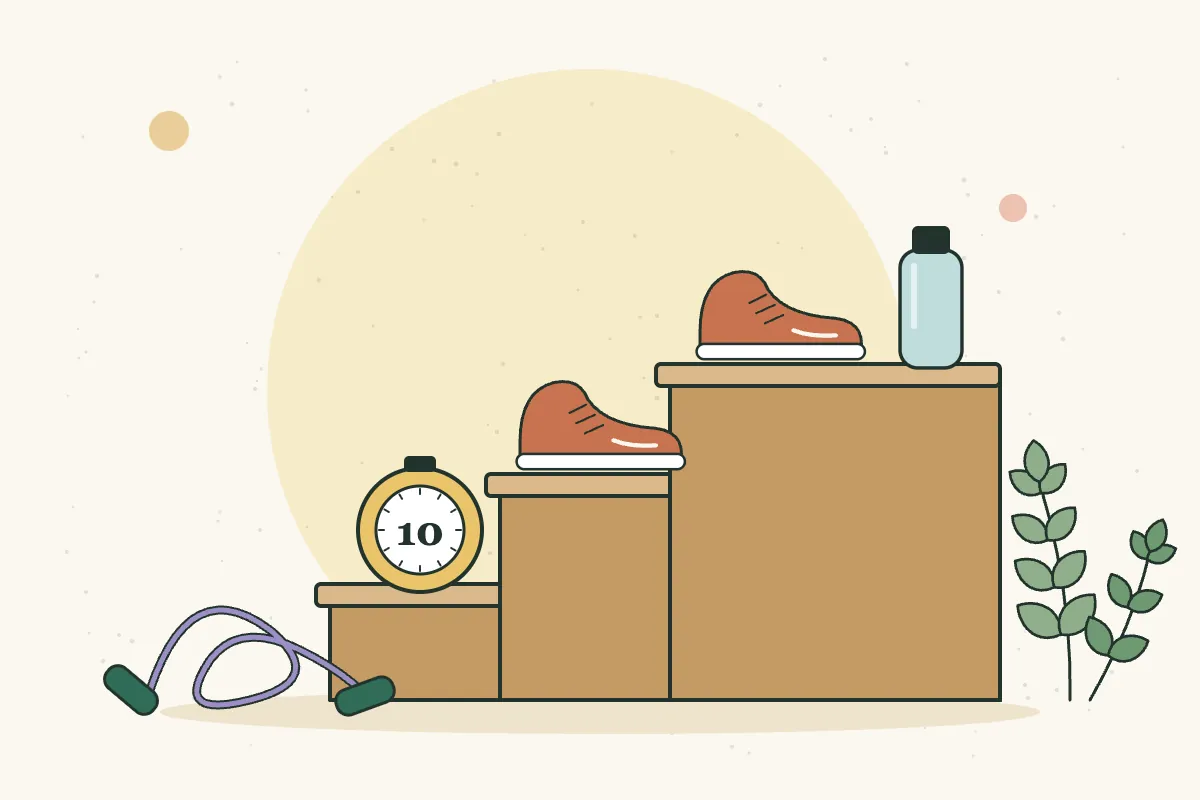
A little exercise really does go a long way. The US Physical Activity Guidelines say that any amount of movement is better than none, and that the biggest health gains go to people who move from doing nothing to doing a little. You do not need long gym sessions: brisk walks, stair climbs and short "exercise snacks" spread through the day all count toward your weekly total.
The short version
- Adults should aim for 150 to 300 minutes of moderate activity a week, plus muscle strengthening on 2 days.
- Since the current guidelines, activity no longer has to come in bouts of at least 10 minutes. Every bit counts.
- The steepest benefit comes from going from inactive to a little active.
- Short bursts like taking the stairs briskly or a 10 minute walk after meals are easy ways to start.
What the guidelines actually say
The Physical Activity Guidelines for Americans, published by the US Department of Health and Human Services, recommend that adults get:
- 150 to 300 minutes a week of moderate-intensity aerobic activity (for example brisk walking), or 75 to 150 minutes of vigorous activity (like running), or a mix of both.
- Muscle-strengthening activity on 2 or more days a week that works all major muscle groups.
- For older adults, balance training as well, to lower the risk of falls.
Earlier advice said aerobic activity only counted if it lasted at least 10 minutes. The current edition dropped that rule. A 3 minute brisk climb up the stairs counts. So does a 5 minute walk to the mailbox and back at a good pace. The guidelines also say clearly: move more and sit less.
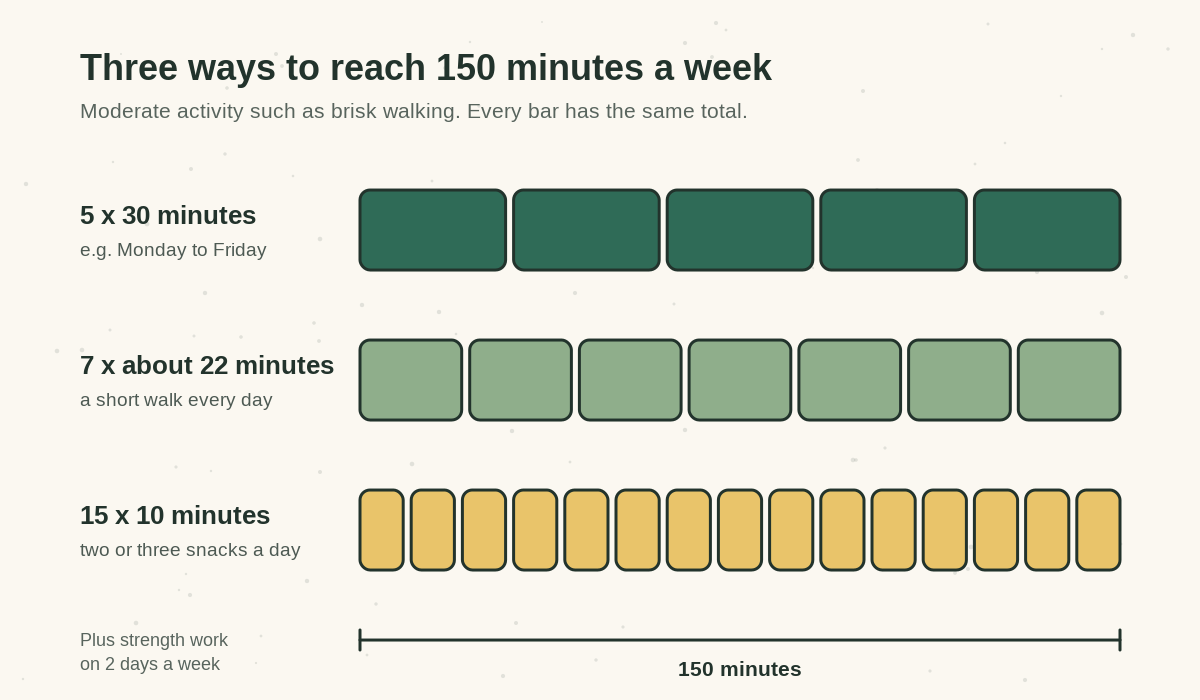
150 minutes sounds like a lot, but split it up and it gets friendlier: that is about 22 minutes a day, or five 30 minute sessions, or fifteen 10 minute bursts over a week.
Why small amounts make a big difference
Research summarized in the guidelines shows that the relationship between activity and health is not a straight line. The first steps from doing very little to doing some activity bring the largest drop in risk for problems like heart disease, type 2 diabetes and early death. More activity brings additional benefits, but each extra minute adds a bit less.
Some benefits even start right away. A single session of moderate activity can temporarily lower blood pressure, improve insulin sensitivity and lift your mood, and many people sleep better on days they are active. Over weeks and months, regular movement helps with blood pressure, cholesterol, weight management, bone strength, anxiety and depression symptoms, and the ability to do daily tasks as you age.
Large studies using wrist-worn activity trackers have also looked at very short bursts of vigorous effort in daily life, such as hurrying up stairs or carrying heavy shopping at a brisk pace. People who had several of these bursts a day tended to have lower risks of early death than people who had none. These are observational findings, so they cannot prove cause and effect, but they fit the bigger picture: short and frequent movement matters.
What is an exercise snack?
An exercise snack is a short burst of activity, usually 1 to 10 minutes, fitted into a normal day. The goal is to get your heart rate up or work your muscles briefly, several times a day. It works well for people who sit a lot, have little free time, or find long workouts intimidating.
10 minute ideas you can do almost anywhere
- Walk after meals. A brisk 10 minute walk after lunch or dinner is one of the easiest habits to keep, and it may help with blood sugar after eating.
- Stair intervals. Walk up one or two flights briskly, walk down slowly, repeat for 5 to 10 minutes. Hold the railing.
- Kitchen counter circuit. While the kettle boils: 10 counter push-ups, 10 squats, 10 calf raises. Repeat two or three times.
- Dance to three songs. Turn up music you like and move. It counts as moderate activity if you breathe harder than usual.
- Jump rope or march in place. One minute on, one minute easy, five rounds. Use an imaginary rope if you lack ceiling height.
- Walking meetings or phone calls. Take one call a day on your feet, walking around the block or the office.
- Park farther away. A few extra minutes of walking at each end of a trip adds up over a week.
- Active TV breaks. During ads or between episodes, do squats, lunges or a wall sit until the show resumes.
- Yard and housework. Raking leaves, vacuuming, scrubbing and gardening at a steady pace count as moderate activity.
- Resistance band mini session. Rows, chest presses and leg presses with a band for 10 minutes. See our guide to DIY bands and home equipment for safe options.
How hard is "moderate"?
Use the talk test. During moderate activity you can talk but not sing. During vigorous activity you can only say a few words before you need a breath. No heart rate monitor needed.
How to make it stick
Tie each snack to something you already do every day: coffee, lunch, the end of a work call, brushing your teeth. Start with one or two snacks a day for a week, then add more. If you sit for long hours, set a reminder to stand up and move every 30 to 60 minutes. Our deskercise guide has moves you can do at your desk.
Tracking helps some people: a simple tally on the fridge or a step counter shows progress over the week, which is the unit the guidelines care about.
Safety first
- If you have heart disease, diabetes, kidney disease, are pregnant, or have been inactive for a long time and plan to start vigorous exercise, talk to your doctor first. Walking is safe for most people to begin with.
- Stop and seek emergency care for chest pain or pressure, pain spreading to the arm, jaw or back, severe shortness of breath, fainting or a racing irregular heartbeat during activity.
- Start slowly and increase gradually to avoid injuries.
Frequently asked questions
Is 10 minutes of exercise a day worth it?
Yes. It is far better than nothing and a great start. Ten minutes a day adds up to 70 minutes a week. Building up from there toward 150 minutes brings more benefit.
Do household chores count as exercise?
They count if they get you breathing harder, such as brisk vacuuming, mowing with a push mower or carrying groceries. Slow, light tasks still beat sitting.
Can short workouts help with weight loss?
They help you burn more energy over the day and support weight maintenance, but diet usually plays the bigger role for weight loss itself. The health benefits of activity apply whether or not your weight changes.
Sources
- US Department of Health and Human Services: Physical Activity Guidelines for Americans, 2nd edition
- Centers for Disease Control and Prevention: Benefits of Physical Activity; Measuring Physical Activity Intensity (talk test)
- American Heart Association: Recommendations for Physical Activity in Adults and Kids
- Nature Medicine: study on vigorous intermittent lifestyle physical activity and mortality using wearable devices
Comments
No comments yet. Tried this at home? Tell us how it went.