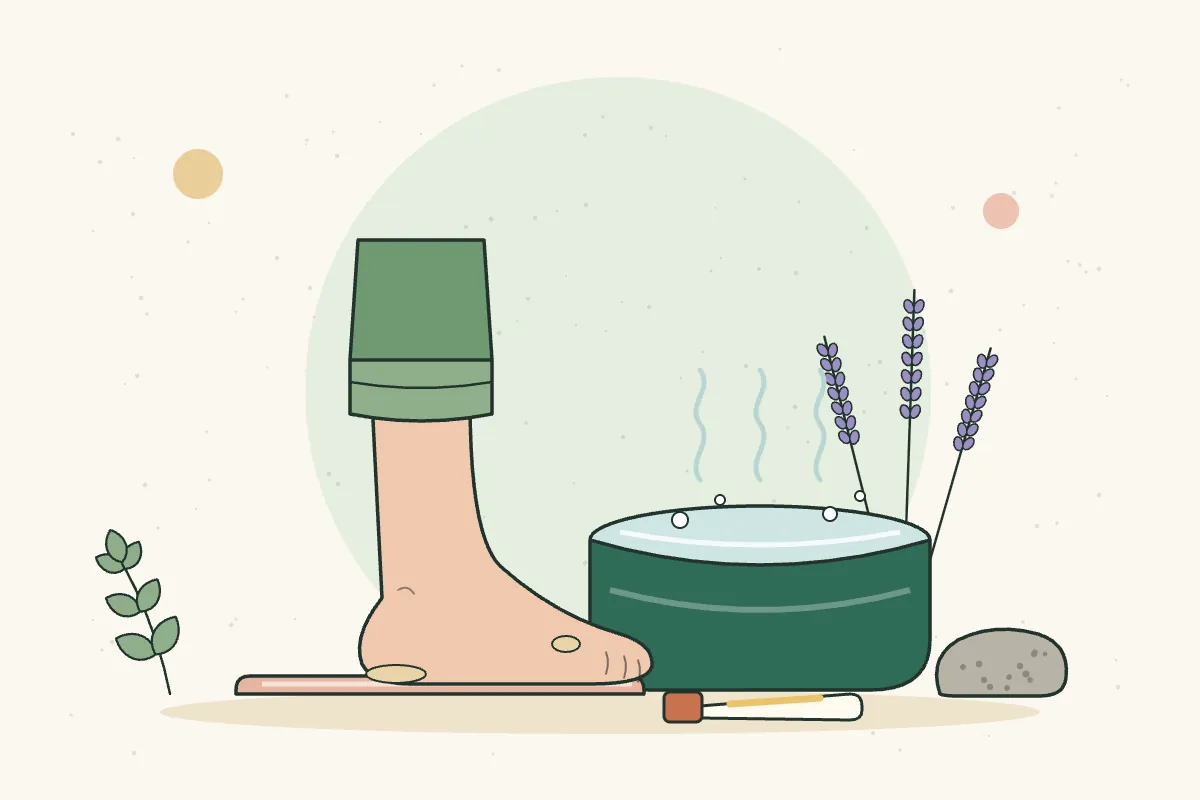
Most corns and calluses can be softened and thinned at home: soak the foot in warm water, gently file the thick skin with a pumice stone, moisturize every day and, most important, stop the pressure or friction that caused it. They usually shrink over a few weeks once the cause is gone. Never cut or shave them yourself, and if you have diabetes or poor circulation, let a podiatrist or doctor handle them instead.
The short version
- Corns and calluses are the skin's way of protecting itself from pressure and rubbing. Remove the cause and they fade.
- Soak for 5 to 10 minutes, file gently with a damp pumice stone, then moisturize. Repeat a few times a week.
- Shoes that fit and simple padding matter more than any remedy.
- Never cut, shave or dig out a corn. Be careful with medicated acid pads.
- Diabetes, neuropathy or poor circulation: see a podiatrist or doctor and skip home treatment.
Corn or callus: what is the difference?
Both are areas of thickened skin that build up where something presses or rubs again and again.
- Calluses are larger, flatter patches of hard skin, usually on the soles under the ball of the foot or the heel. They are rarely painful and are common on hands too, for example from tools, guitars or weights.
- Hard corns are smaller, deeper and have a firm center. They tend to sit on the tops and sides of the toes, where shoes press, and can hurt when pressed.
- Soft corns form between the toes, often between the fourth and fifth toe. Sweat keeps them moist, so they look whitish and rubbery.
A spot on the sole that hurts more when you squeeze it from the sides, or shows tiny black dots, may be a plantar wart rather than a callus. Warts need a different treatment, so have it checked if you are unsure.
How to treat corns and calluses at home
This routine follows the self-care advice of the American Academy of Dermatology. It is meant for healthy feet with normal feeling and good circulation.
- Soak. Put your feet in warm (not hot) water for 5 to 10 minutes, until the hard skin softens. Test the water with your elbow or a thermometer first.
- File gently. Wet a pumice stone and rub the softened skin in circular or sideways strokes. Take off only a thin layer at a time. If it feels sore or the skin turns pink, stop. Removing too much can cause bleeding and infection.
- Moisturize daily. Apply a thick foot cream after drying your feet, and again at bedtime. Creams containing urea, salicylic acid or ammonium lactate help soften thick skin gradually. Keep cream out of the spaces between your toes, which should stay dry.
- Pad the pressure point. Non-medicated, donut-shaped pads around a corn, or a soft insole under a callus, take pressure off while the skin recovers. Toe separators or sleeves can protect soft corns.
- Repeat. A few times a week is enough. Thick calluses take weeks to thin out, not one session.
Clean your pumice stone
Rinse the stone after each use, scrub it with a brush and let it dry completely. A pumice stone that stays damp can harbor bacteria and fungi. Do not share it, and replace it when it gets smooth.
Fix the cause: footwear and feet
Corns and calluses come back as long as the pressure continues. The lasting fix is almost always in your shoes.
- Buy shoes that fit in length and width, with room to wiggle your toes. Shop later in the day, when feet are slightly larger, and have both feet measured now and then, since foot size can change with age.
- Limit narrow, pointed and high-heeled shoes. They push weight onto the ball of the foot and squeeze the toes together.
- Wear socks that fit and do not bunch up. Moisture-wicking socks help reduce friction.
- Trim your toenails straight across. Long nails push toes up against the top of the shoe.
- Look for an underlying cause. Hammertoes, bunions, flat feet and the way you walk can create pressure points. If corns keep returning in the same spot, a podiatrist can look at your foot mechanics and suggest orthotics or other options.
Hand calluses from work or sports are usually protective and do not need removal. If they crack or catch, file them a little and wear gloves.
What to avoid
- Do not cut, shave or dig out corns with razors, scissors or knives. It is easy to cut too deep, and the wound can become infected.
- Be careful with medicated corn pads and liquids. Many contain salicylic acid, which dissolves thick skin but can also damage the healthy skin around it and cause a sore. Follow the directions exactly, and do not use them if you have diabetes, poor circulation, fragile skin or numbness in your feet.
- Do not use metal graters or callus shavers aggressively. They remove too much at once, and the skin often grows back thicker.
- Do not soak in very hot water. It dries skin and can burn feet with reduced feeling.
Body scrubs, such as a coconut oil sugar scrub, can smooth slightly rough heels, but they are no match for a real callus. The pumice and cream routine works better.
Safety first
- Diabetes, neuropathy, peripheral artery disease or poor circulation: do not treat corns or calluses yourself, not even with a pumice stone or acid pads. Small injuries on the feet can turn into ulcers and serious infections. Check your feet daily and have a podiatrist or your doctor care for any thick skin.
- See a doctor promptly if a corn or callus becomes very painful, red, warm or swollen, drains fluid or pus, bleeds, shows dark discoloration underneath, or turns into an open sore.
- Get it checked if you are not sure it is a corn, if it keeps coming back despite good shoes, or if pain changes the way you walk.
Frequently asked questions
How long does it take to get rid of a corn?
Once the pressure is gone, a corn usually softens and shrinks over a few weeks of regular soaking, filing and moisturizing. Deep or long-standing corns may need a podiatrist to pare them down.
Do corns have roots?
No. The firm center of a hard corn is a dense core of compressed skin, not a root. That core is why corns can hurt so much under pressure, and why digging at it is risky.
Should I remove a callus completely?
No. A thin layer of callus protects the skin underneath. The goal is to keep it thin and comfortable, not to file down to soft pink skin.
Sources
- American Academy of Dermatology: How to treat corns and calluses
- Mayo Clinic: Corns and calluses, diagnosis and treatment
- American Podiatric Medical Association: Corns and calluses
- American Diabetes Association: Foot complications and foot care
Comments
No comments yet. Tried this at home? Tell us how it went.