A coconut oil sugar scrub takes two ingredients and about five minutes: mix two parts sugar with one part softened coconut oil, and you have a body scrub that smooths rough skin and leaves a light layer of oil behind. The sugar does the polishing, the oil keeps skin from feeling tight afterward. Below you will find the basic recipe, ratios for different skin needs, how to store it safely and the few situations where you should not use it.
The short version
- Basic recipe: 1 cup (200 g) sugar plus 1/2 cup (about 110 g) softened coconut oil, stirred together.
- Use it on damp skin in the shower once or twice a week, with gentle circles, then rinse.
- Store it in a clean, dry jar with a lid, scoop with a dry spoon and use it within a few weeks.
- Oil makes the shower floor slippery and can build up in drains. Wipe the floor and run hot water afterward.
- For the body only: not for the face, broken skin, sunburn or freshly shaved areas.
What you need
- 1 cup (200 g) sugar. White granulated sugar gives a firmer scrub. Brown sugar has softer, smaller crystals and feels gentler.
- 1/2 cup (about 110 g) coconut oil. Virgin coconut oil smells of coconut, refined coconut oil is nearly scentless. Both work.
- Optional: 1 teaspoon vanilla extract for scent, or a few drops of a skin-safe essential oil (see the safety box).
- A mixing bowl, a fork or spoon and a clean glass jar with a tight lid, about 12 ounces (350 ml).
How to make it
- Soften the coconut oil. Coconut oil turns liquid at about 76°F (24°C). If yours is solid, set the jar in a bowl of warm water for a few minutes. You want it soft and spoonable, not hot.
- Add the sugar. Put the sugar in a bowl, pour the oil over it and stir with a fork until every crystal is coated. The texture should resemble wet sand.
- Adjust the texture. Too oily and runny? Add a tablespoon of sugar. Too dry and crumbly? Add a teaspoon of oil. Stir in vanilla or essential oil last, if you use any.
- Fill the jar. Spoon the scrub into a clean, completely dry jar and close it. Label it with the date.
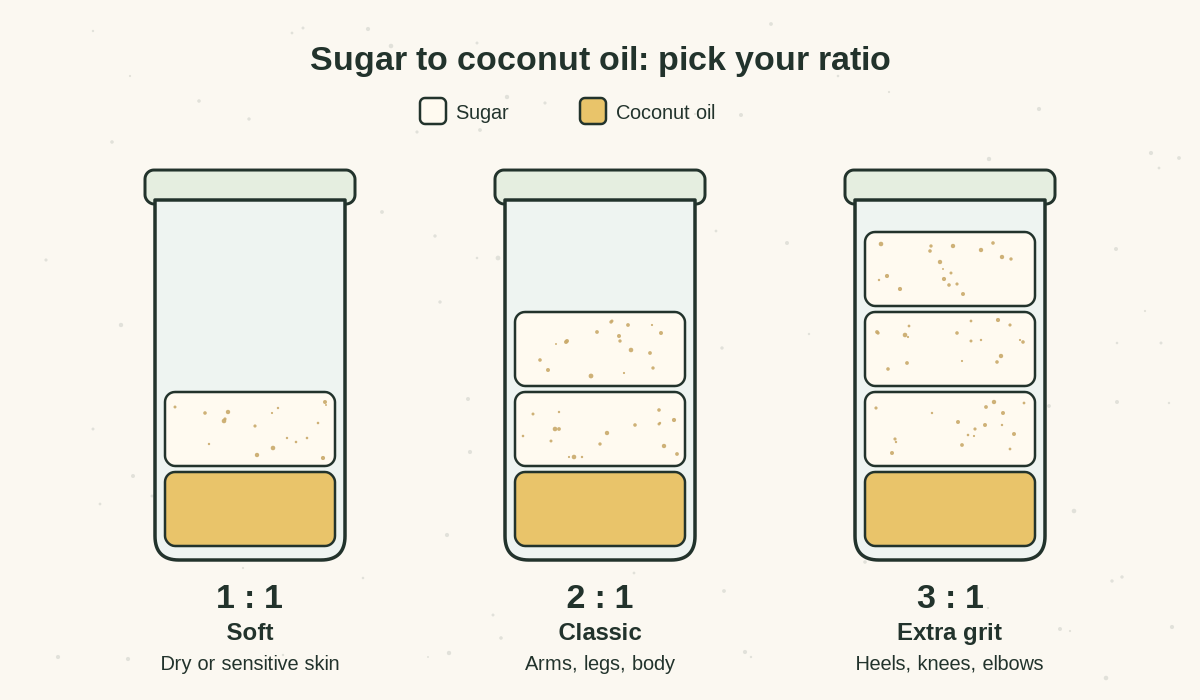
Pick your ratio
The 2 to 1 ratio is a reliable starting point, but you can tune it:
- 1 part sugar to 1 part oil: a soft, oily scrub that glides easily. Good for dry skin and for people who find scrubs harsh. It separates more in a warm bathroom.
- 2 parts sugar to 1 part oil: the classic. Enough grit to smooth arms and legs, enough oil to leave skin soft.
- 3 parts sugar to 1 part oil: a firm, gritty paste for rough areas like heels, knees and elbows. Too strong for most other places.
Fine sugar is gentler than coarse sugar. Salt is sometimes swapped in, but salt crystals are sharper and sting on any tiny nick, so sugar is the better choice for most people.
How to use a sugar scrub
- Wet your skin first. Use the scrub toward the end of a shower or bath, when skin is warm and damp.
- Take a small amount. About a tablespoon covers an arm or a lower leg. Scoop with a dry spoon rather than wet fingers.
- Massage gently. Work in slow circles for 30 seconds to a minute per area. Light pressure is enough; the sugar does the work. Pressing hard does not make it work better and can leave skin red.
- Rinse with warm water. Most of the sugar dissolves right away. A thin film of oil stays on the skin.
- Pat dry. You can often skip body lotion afterward. If you want more moisture, apply it while skin is still slightly damp.
Once or twice a week is plenty. Exfoliating every day tends to irritate skin rather than improve it. If you like spa-style treatments, a scrub before a homemade body wrap is a pleasant combination, as long as your skin tolerates both.
If the scrub is solid or runny
Below about 76°F (24°C) coconut oil hardens, so in a cool bathroom your scrub may turn firm. Break off a little with a spoon; it softens in your warm hand. In summer it can turn liquid and the sugar settles at the bottom. Just stir it before use.
Storage and shelf life
Sugar and coconut oil keep well on their own, but a homemade scrub has no preservative. The weak point is water: wet fingers or shower spray in the jar create conditions where mold and bacteria can grow.
- Use a jar with a tight lid and keep it closed between uses.
- Scoop with a clean, dry spoon, never with wet hands.
- Make small batches and use them within a few weeks.
- Throw it out if it smells sour or rancid, changes color or shows fuzzy spots.
Bathroom safety: floors and drains
Oil scrubs have two practical downsides that are easy to forget.
Slippery floors. Oil that rinses off your body coats the tub or shower floor and makes it slick. Stand on a non-slip mat, hold on when stepping out, and wipe the floor with hot water and a little dish soap afterward. Be extra careful if you have balance problems, and keep this scrub away from children's bath time.
Drains. Coconut oil solidifies in cool pipes and can build up over time. Run hot water for a minute after using the scrub, and never pour leftover scrub down the sink. Scrape old batches into the trash instead.
Safety first
- Not for the face. Facial skin is thinner, and sugar crystals have uneven edges. Coconut oil can also clog pores and worsen breakouts in acne-prone skin.
- Skip it on sunburned, broken, freshly shaved or waxed skin, rashes, eczema or psoriasis flares, and anywhere that feels sore.
- Patch test if you have sensitive skin or a known allergy: rub a little on your inner forearm, rinse, and wait 24 hours.
- Essential oils are optional. If you add them, keep it to about 10 drops per batch, avoid them during pregnancy and on children, and leave out citrus oils such as bergamot or cold-pressed lime or lemon, which can make skin more sensitive to sunlight. Concentrated oils can also harm cats, so store the jar out of pets' reach.
Frequently asked questions
Can I use olive oil instead of coconut oil?
Yes. Olive, sweet almond or sunflower oil all work and stay liquid at room temperature, so the scrub will be softer and looser. Use a little less oil to start.
Does a sugar scrub help with ingrown hairs?
Gentle exfoliation a day or two before shaving can help free hairs on the legs or bikini line. Do not use it right after shaving, when the skin is most sensitive.
Can I give this scrub as a gift?
Yes, it makes a nice small gift. Make it shortly before giving, use a clean jar with a lid, and add a tag with the ingredients, the date and a note to use it within a few weeks and not on the face. For a coffee-scented variation, see our coffee scrub recipe.
Sources
- American Academy of Dermatology: How to safely exfoliate at home
- Cleveland Clinic: Exfoliation, what it is and how to do it
- US Food and Drug Administration: Cosmetics safety Q and A, shelf life and expiration dating
- National Center for Complementary and Integrative Health: Aromatherapy and essential oils
Comments
No comments yet. Tried this at home? Tell us how it went.