The most reliable way to repel spiders is to make your home less interesting to them: fewer gaps to crawl through, fewer insects to eat and fewer quiet, cluttered corners to hide in. Scented sprays such as peppermint oil may help a little in a specific spot, but the evidence that they keep spiders out is thin. The good news is that the steps that work are simple and cheap.
The short version
- Spiders come indoors for shelter and for the insects they hunt. Fewer bugs means fewer spiders.
- Sealing gaps, reducing clutter and changing outdoor lighting do more than any repellent.
- Peppermint and vinegar sprays are harmless to try, but expect short, modest effects.
- Most house spiders in the US are harmless. Learn to recognize the two that are not.
Why spiders end up indoors
Many spiders you see inside actually live there all year in quiet places like basements, closets and garages. Others wander in during late summer and fall, when males go looking for mates and cooler nights push them toward sheltered spots. Either way, a spider stays where it finds two things: hiding places and food. Indoors, food means flies, moths, gnats and other small insects.
That is why a house with bright porch lights, open screens and a damp basement tends to have more spiders than one where those things are under control.
What actually keeps spiders out
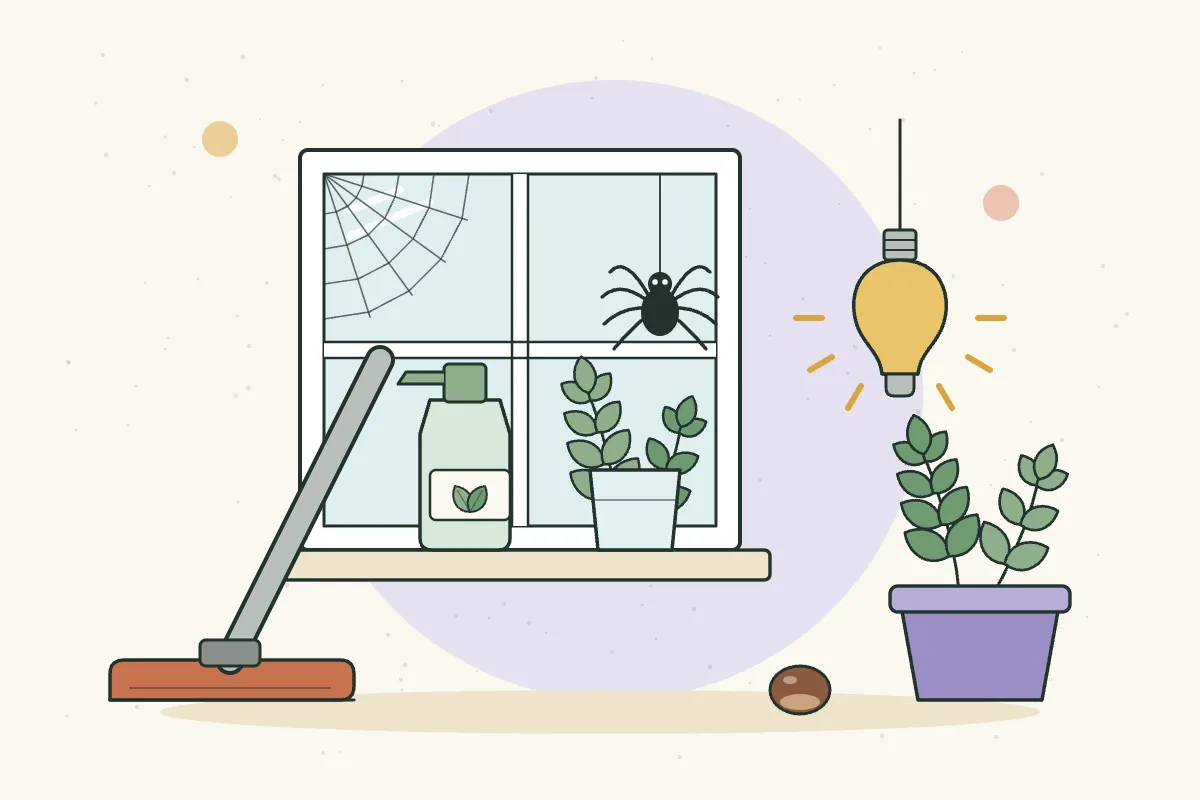
- Seal the gaps. Check door sweeps, window screens and the spots where pipes, cables and vents enter the house. Repair torn screens, add weatherstripping under doors and caulk small cracks. This also helps against ants and mice.
- Rethink your outdoor lights. Bright white lights near doors attract night-flying insects, and spiders follow the buffet. Yellow bug lights or warm LED bulbs draw fewer insects. Where possible, mount lights a little away from the door and switch them off when not needed.
- Clear the edges of the house. Keep firewood, leaf piles, stacked pots and dense plants a few feet away from the foundation. These are prime spider habitats right next to your walls.
- Reduce indoor clutter. Cardboard boxes on the floor of a basement or closet are ideal hiding places. Use plastic bins with lids and lift storage off the floor where you can.
- Vacuum regularly. Run the vacuum along baseboards, under furniture, in window frames and in ceiling corners. Removing webs and egg sacs is one of the most effective things you can do. Empty the canister or seal the bag afterward.
- Control humidity. A dehumidifier in a damp basement makes the space less friendly for the insects spiders feed on.
Use sticky traps as a detector
Flat glue boards placed along walls in the basement or garage show you which spiders are around and where they travel. Use them to monitor, not as a cure, and place them where pets and children cannot touch them.
Do natural spider repellents work?
Peppermint oil spray
This is the most popular home remedy. A typical mix is about 15 to 20 drops of peppermint essential oil in 2 cups (about 475 ml) of water with a small squirt of dish soap, sprayed along window frames, door sills and corners. Some people notice fewer spiders in those spots for a while. Controlled research is limited, and the scent fades within days, so think of it as a pleasant extra, not a barrier.
Vinegar
Diluted white vinegar can kill a spider it is sprayed on directly, and it is a fine cleaner for window sills. It does not leave a lasting repellent effect, and it can damage natural stone and some finishes.
Chestnuts, hedge apples and citrus peels
These folk remedies are widespread, but there is no good evidence that they repel spiders. They are harmless, they just should not replace the steps above.
Bug bombs and broad sprays
Total-release foggers are a poor choice for spiders. They often fail to reach the hidden places spiders sit, and they put pesticide residue on every surface in the room. If you want a chemical treatment, a targeted crack-and-crevice product used exactly as labeled, or a licensed professional, is the better route.
Safety first
- Pets: essential oils such as peppermint, tea tree and citrus oils can be harmful to cats and dogs. Do not spray where pets sleep, eat or groom, and keep the bottle out of reach.
- Kids: store homemade sprays in clearly labeled bottles. Strong mint oils should not be used near the face of small children.
- Surfaces: oil and vinegar can stain or etch wood, stone and fabric. Test a hidden spot first.
Which spiders are actually dangerous?
The vast majority of spiders in American homes, such as cellar spiders, house spiders and jumping spiders, are harmless to people. They rarely bite, and when they do, the result is usually similar to a mild insect bite. They also eat other pests.
Two groups deserve respect:
- Widow spiders (including the black widow) are shiny and black, often with a red hourglass mark on the underside. They hide in woodpiles, garages, sheds and outdoor furniture.
- The brown recluse is tan to brown with a darker violin-shaped mark on its back. It lives mainly in the central and southern Midwest and parts of the South, and likes undisturbed boxes, closets and attics.
Wear gloves when moving stored items or firewood, shake out shoes and clothes that have been sitting in a garage, and keep beds away from the wall in areas where recluse spiders are common.
When a bite needs medical care
Most spider bites heal on their own with washing, a cool compress and time. See a doctor promptly if you have severe pain or muscle cramps spreading from the bite, sweating, nausea or trouble breathing, a wound that turns dark, blisters or grows over the following days, signs of infection such as spreading redness, warmth or fever, or if the person bitten is a young child. If you can safely capture or photograph the spider, bring it along.
Frequently asked questions
Why do I see more spiders in the fall?
Many male spiders roam in late summer and fall looking for mates, so they are simply more visible. Cooler weather also pushes some species toward sheltered spaces.
Does peppermint oil kill spiders?
Not reliably. At typical dilutions it mainly creates a strong scent. Direct spraying with soapy water can kill a spider, but that does not prevent new ones.
Should I kill every spider I find?
Not necessarily. Harmless house spiders eat flies and other insects. Many people simply move them outside with a glass and a piece of paper.
Will getting rid of other bugs reduce spiders?
Yes. Spiders follow their food. Dealing with gnats, flies and ants in the house makes your home less attractive to hunters.
Sources
- University of California Statewide IPM Program: Pest Notes, Spiders
- University of Kentucky Entomology: Spiders in and around the home
- Centers for Disease Control and Prevention, NIOSH: Venomous spiders
- National Pesticide Information Center: Total release foggers
Comments
No comments yet. Tried this at home? Tell us how it went.