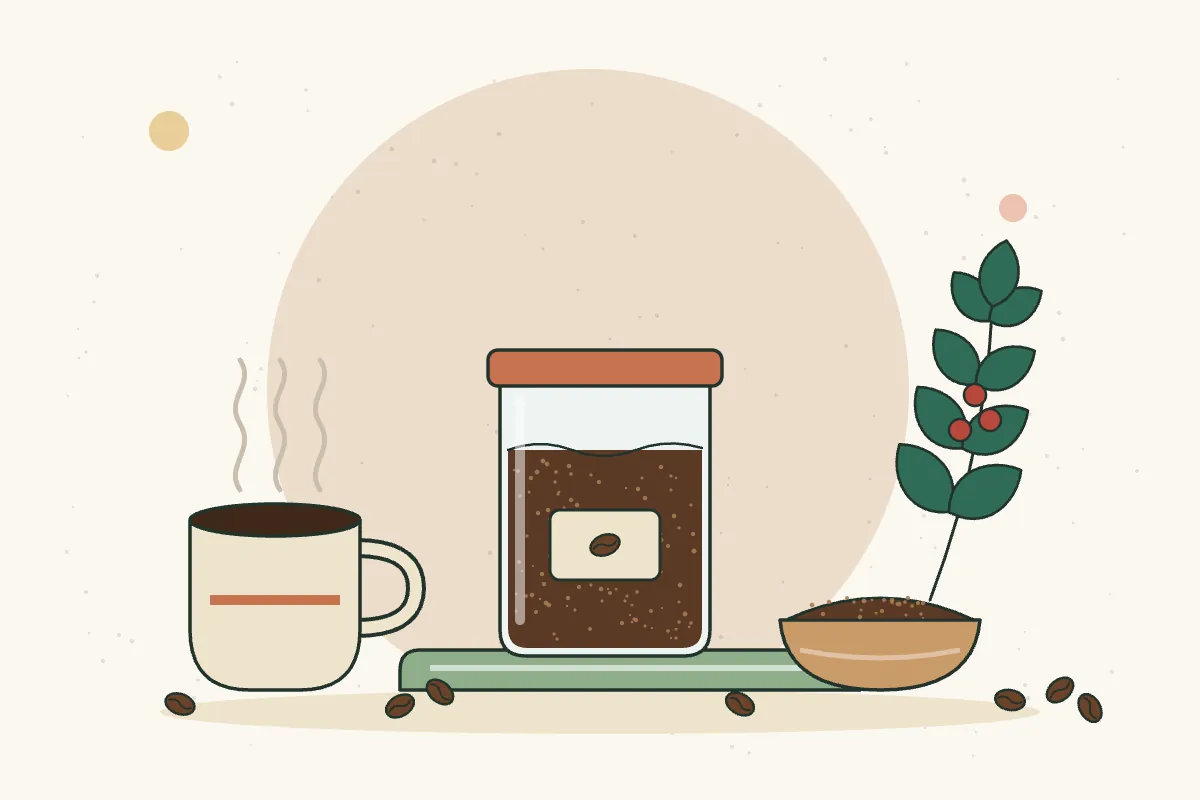
A coffee scrub is a good, cheap body exfoliator: the grounds buff away dry, flaky skin, and the oil you mix in leaves it soft. That is what it does. It will not give you "flawless" skin, and despite many online claims it does not get rid of cellulite. Any smoother, tighter look afterward fades within hours. If you go in with those expectations, a homemade coffee scrub is a pleasant weekly treat for your arms, legs and body.
The short version
- Coffee grounds work as a physical exfoliant, like sugar or salt. That is the main benefit.
- Claims about cellulite are not backed by good evidence. At best, the effect is temporary.
- Basic recipe: 1/2 cup ground coffee, 1/4 cup sugar and 1/4 cup coconut or olive oil.
- Body only. Skip it on the face, on acne-prone or inflamed skin and on broken skin.
- Grounds do not dissolve. Use a drain strainer and throw leftovers in the trash, not down the drain.
What a coffee scrub can and cannot do
What it does
Coffee grounds are small, firm particles. Rubbed over damp skin, they loosen dead skin cells from the surface, which makes rough patches on elbows, knees and legs feel smoother. The added oil softens the skin and makes the scrub easier to spread. In that sense, a coffee scrub works much like any other homemade body scrub.
What it does not do
The popular promise is that caffeine in coffee "tightens" skin and melts cellulite. There are a few things to know:
- Cellulite is structural. It forms where fat pushes against bands of connective tissue under the skin. It is extremely common, especially in women, and it is not a skin problem a scrub can reach.
- Caffeine studies are about creams, not scrubs. Caffeine shows up in many commercial anti-cellulite creams, and small studies of such products report modest effects at best. A scrub that stays on the skin for a minute and is then rinsed off is a very different thing.
- The "after" look is temporary. Massage brings blood flow to the skin and can briefly change how dimpling looks. The American Academy of Dermatology notes that massage may temporarily improve the appearance of cellulite. That effect does not last.
Coffee also contains antioxidants, but there is no good evidence that a rinse-off scrub delivers meaningful amounts of them to your skin. Enjoy the scrub for what it is: a nice way to exfoliate that smells good.
Basic coffee scrub recipe
This makes enough for about three to four full-body uses.
- 1/2 cup (about 45 g) ground coffee. A medium grind is best. Very fine espresso grounds feel muddy; very coarse ones scratch.
- 1/4 cup (50 g) sugar, white or brown. Optional, but it makes the scrub feel less gritty and rinses off well.
- 1/4 cup (about 55 g) coconut oil, softened, or olive oil.
- Mix the dry ingredients. Stir coffee and sugar together in a bowl.
- Add the oil. Pour in the softened oil and stir until it looks like damp soil. Add a little more coffee if it is runny, a little more oil if it is dry.
- Store it. Spoon it into a clean, dry jar with a lid. Keep it out of the shower spray between uses.
Using leftover grounds
Used grounds from your morning coffee work, but they are wet and can grow mold within a few days. Either use them the same day, or spread them thinly on a plate and let them dry completely before mixing. For more ideas, see our guide to uses for leftover coffee grounds.
How to use it
- Start in the shower or tub. Wet your skin with warm water first. The scrub is messy, so use it where grounds can be rinsed away.
- Massage in gentle circles. Take a small handful and work it over arms, legs, hips and back of the body for 30 seconds to a minute per area, with light pressure.
- Rinse thoroughly. Grounds cling to skin and hair. Rinse until the water runs clear.
- Pat dry with a dark towel. Coffee can stain light towels and the grout in your shower.
Once a week is a good rhythm for most people. Twice a week is fine for tough, dry skin. More often tends to irritate. If you prefer a gentler option, a plain coconut oil sugar scrub dissolves completely and is easier on sensitive skin.
Protect your drains
Coffee grounds do not dissolve in water. Plumbers regularly find them in clogged pipes, especially combined with oil that hardens as it cools. A few habits prevent trouble:
- Put a mesh drain strainer or hair catcher over the drain before you scrub.
- Wipe the leftover grounds out of the tub with a paper towel and put them in the trash or compost.
- Run hot water for a minute afterward to move the oil along.
- Never pour an old batch of scrub down the sink.
Oil also makes the tub floor slippery. Use a non-slip mat and wipe the floor before the next person showers.
Safety first
- Not for the face. Coffee particles are sharp-edged and too rough for facial skin. On acne-prone skin, scrubbing can worsen breakouts, and coconut oil may clog pores.
- Skip it on sunburn, cuts, rashes, freshly shaved or waxed skin, and during eczema, psoriasis or rosacea flares.
- Go gently. If your skin turns red, burns or stings, rinse it off and give your skin a break for a few days.
- Patch test on your inner forearm if you have sensitive skin or allergies. Coffee can also leave a faint brown tint on very light skin for a short time.
Frequently asked questions
Does a coffee scrub get rid of cellulite?
No. It can make skin feel smoother, and massage may make cellulite look slightly less visible for a few hours. There is no good evidence that it reduces cellulite over time.
Can I use a coffee scrub on my face?
It is not a good idea. The grounds are too rough for facial skin and can cause irritation and tiny scratches. Dermatologists generally recommend gentle exfoliation for the face, if any.
How long does homemade coffee scrub last?
Made with dry grounds and stored in a closed jar out of the shower, it keeps for a few weeks. Throw it out if it smells sour or musty or you see mold.
Sources
- American Academy of Dermatology: Cellulite treatments, what really works
- American Academy of Dermatology: How to safely exfoliate at home
- Cleveland Clinic: Cellulite, causes and treatment
- Mayo Clinic: Cellulite, diagnosis and treatment
Comments
No comments yet. Tried this at home? Tell us how it went.