A water softener removes the calcium and magnesium that make water "hard." The main benefits are practical: less white scale on faucets, kettles and water heaters, less soap scum, and soap and shampoo that lather more easily. Hard water is not a health risk, though, and softeners have real downsides, including cost, salt use and a small amount of added sodium. Whether one is worth it depends on how hard your water actually is.
The short version
- Hard water is safe to drink. Its problems are scale, soap scum and spotty dishes.
- Test first. Below about 7 grains per gallon (120 mg/L), most homes manage fine without a softener.
- Salt-based softeners add roughly 8 mg of sodium per liter for every grain per gallon removed.
- Keep one unsoftened cold tap for drinking and cooking if you watch your sodium.
- Descaling, rinse aid and a lower water heater setting are cheap alternatives for moderately hard water.
What hard water is
As groundwater moves through limestone and chalk, it dissolves calcium and magnesium. Water companies and test kits report hardness either in milligrams per liter (mg/L) or in grains per gallon (gpg), where 1 gpg equals about 17.1 mg/L. The US Geological Survey uses these bands:
- Soft: 0 to 60 mg/L (0 to about 3.5 gpg)
- Moderately hard: 61 to 120 mg/L (about 3.5 to 7 gpg)
- Hard: 121 to 180 mg/L (about 7 to 10.5 gpg)
- Very hard: more than 180 mg/L (more than 10.5 gpg)
Large parts of the Midwest, Southwest and Texas have hard to very hard water, while much of the Pacific Northwest and New England is soft.
How to find out what you have
If you are on city water, look up your utility's annual water quality report (the Consumer Confidence Report), which often lists hardness, or call the utility. On a private well, use an inexpensive hardness test strip or include hardness in a lab water test. Typical signs at home are white crust on showerheads, cloudy spots on glasses and a film in the tub.
Benefits of a water softener
- Less scale in appliances. Scale builds up inside water heaters, kettles, coffee makers and dishwashers. It insulates heating elements and can shorten the life of tankless heaters in particular.
- Cleaner fixtures and glass. Shower doors, faucets and tiles stay clearer with much less scrubbing.
- Less soap needed. Soap reacts with calcium and magnesium to form scum. Soft water lathers more easily, so you use less detergent, shampoo and soap.
- Softer laundry. Many people find towels and clothes feel less stiff.
Some people with dry skin or eczema hope softened water will help. A UK trial in children with eczema found that installing an ion exchange softener did not lead to a meaningful improvement compared with usual care, so this is not a good reason on its own to buy one.
How a softener works
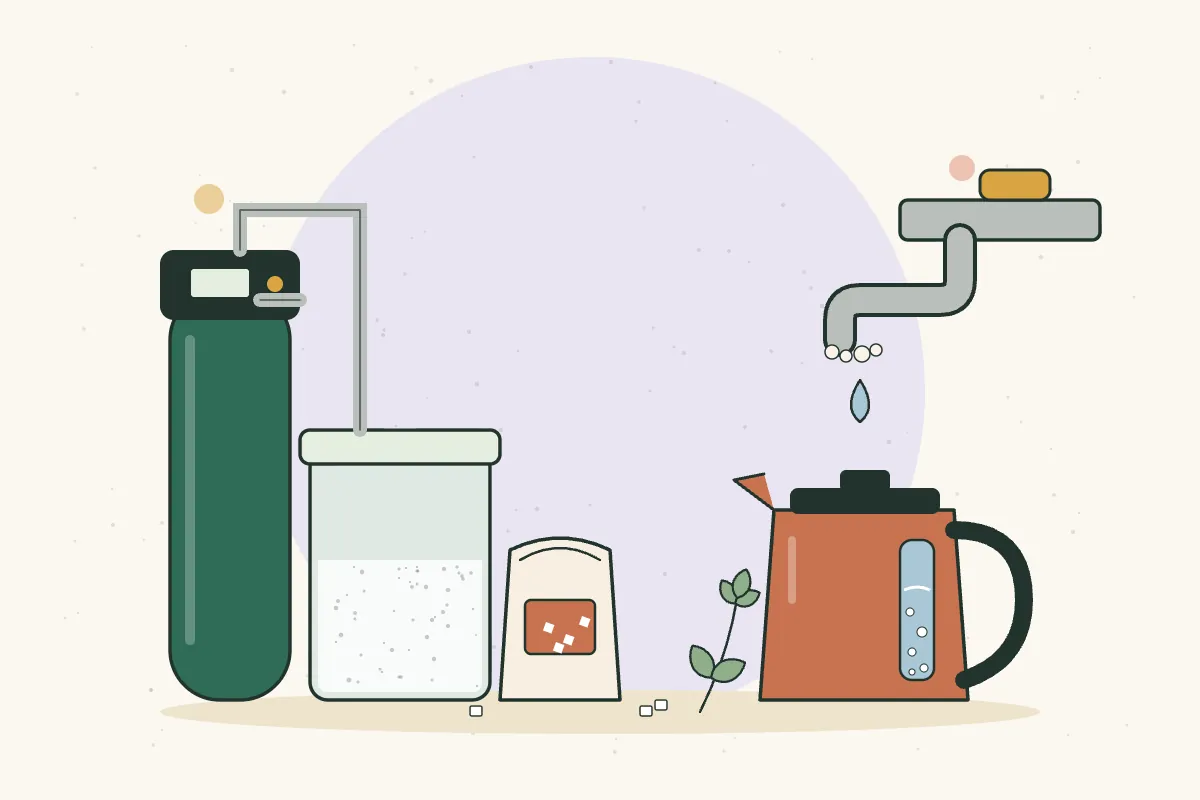
Most home softeners use ion exchange. Water flows through a tank of resin beads that grab calcium and magnesium and release sodium (or potassium) in their place. When the beads are full, the unit regenerates: it flushes them with brine from a salt tank and sends the mineral-rich rinse water down the drain. You refill the salt every few weeks to months, depending on hardness and household size.
Drawbacks to weigh
- Cost and upkeep. Purchase, installation, salt and occasional service add up.
- Wastewater and salt discharge. Regeneration uses water and sends salty brine into sewers or septic systems. Some communities, especially in parts of California, restrict self-regenerating softeners for that reason. Check local rules first.
- Slippery feel. Soft water can make soap feel harder to rinse off. That is normal and harmless.
- Not for plants. Sodium-softened water is a poor choice for watering houseplants, gardens and lawns. Outdoor spigots are usually left on hard water.
The sodium question
A softener does not make water taste salty, but it does add sodium. Each grain per gallon of hardness removed adds roughly 8 mg of sodium per liter. For water at 10 gpg, that is about 80 mg per liter. Drinking 2 liters would add around 160 mg a day, a small amount next to the 2,300 mg daily limit in the Dietary Guidelines for Americans, but it is not nothing for very hard water or for people on a strict low-sodium diet.
Safety first
- If your doctor has put you on a sodium-restricted diet (for example for heart failure, kidney disease or high blood pressure), ask before drinking softened water. Options include a bypassed cold tap for drinking and cooking, a reverse osmosis filter at the kitchen sink, or potassium chloride instead of salt.
- People with kidney disease or who take potassium-raising medications should also check with their doctor before switching to potassium chloride.
- Do not use softened water to mix baby formula unless your pediatrician says it is fine; use the unsoftened tap or water recommended for infants.
Alternatives to a softener
If your water is only moderately hard, these steps may be enough:
- Descale regularly. Soak showerheads and faucet aerators in white vinegar for an hour and run a vinegar cycle through the kettle and coffee maker. Our vinegar guide lists where acid is safe and where it is not.
- Use rinse aid and the right detergent. They cut spotting on dishes a lot.
- Lower the water heater temperature. Scale forms faster at higher temperatures. Around 120°F (49°C) is the setting the Department of Energy suggests for most homes.
- Flush the water heater. Draining sediment once a year (or as the manufacturer recommends) keeps it working efficiently.
- Consider a salt-free conditioner. These "template assisted crystallization" units change how minerals form crystals rather than removing them. Some independent testing suggests they reduce scale, but results vary, and they do not stop soap scum. Magnetic clamp-on devices have weak evidence behind them.
Quick hard water check
Fill a clear bottle one third with water, add 10 drops of pure liquid soap (not detergent) and shake. Little foam and cloudy water point to hard water. A test strip gives you a real number.
Scale on the water heater is one item on our yearly home inspection checklist, which is a good moment to check how your water is treating your appliances.
Frequently asked questions
Is hard water bad for your health?
No. The World Health Organization does not consider hardness a health concern, and the calcium and magnesium in it are nutrients. The reasons to soften are practical, not medical.
Is softened water safe to drink?
Yes for most people. The extra sodium is modest unless your water is very hard or you are on a strict sodium limit.
Can I use potassium instead of salt?
Yes. Potassium chloride works in most softeners and avoids added sodium, but it costs more, and the unit may need a setting change.
Sources
- US Geological Survey: Hardness of water
- US Environmental Protection Agency: Consumer Confidence Reports
- World Health Organization: Hardness in drinking water, background document
- US Department of Energy: Water heating, energy saver tips
- Dietary Guidelines for Americans: Sodium recommendations
- Softened Water Eczema Trial (SWET): Randomized trial of ion exchange water softeners for childhood eczema
Comments
No comments yet. Tried this at home? Tell us how it went.