Can you lose 10 pounds in a week? The scale can show it, especially in the first week of a big change, but almost none of that drop is body fat. It is mostly water and stored carbohydrate, and it tends to come back as soon as you eat normally again. A safe, lasting pace for most adults is about 1 to 2 pounds (0.5 to 0.9 kg) per week, and the habits below are built for exactly that.
The short version
- Losing 10 pounds of actual fat in seven days would take a deficit of roughly 35,000 calories, which is not realistic or safe.
- Fast early drops are mostly water released along with stored carbohydrate (glycogen).
- The CDC notes that people who lose weight gradually, about 1 to 2 pounds a week, are more likely to keep it off.
- Small, repeatable habits beat crash diets, detox teas and water pills, which can be harmful.
Why 10 pounds in a week is mostly water
A pound of body fat stores a lot of energy. The classic rule of thumb puts it at about 3,500 calories. That rule is a simplification, since the body adapts as you lose weight, but it shows the scale of the problem: 10 pounds of fat in a week would mean eating about 5,000 calories less than you burn every single day. For most people that is more than their entire daily intake.
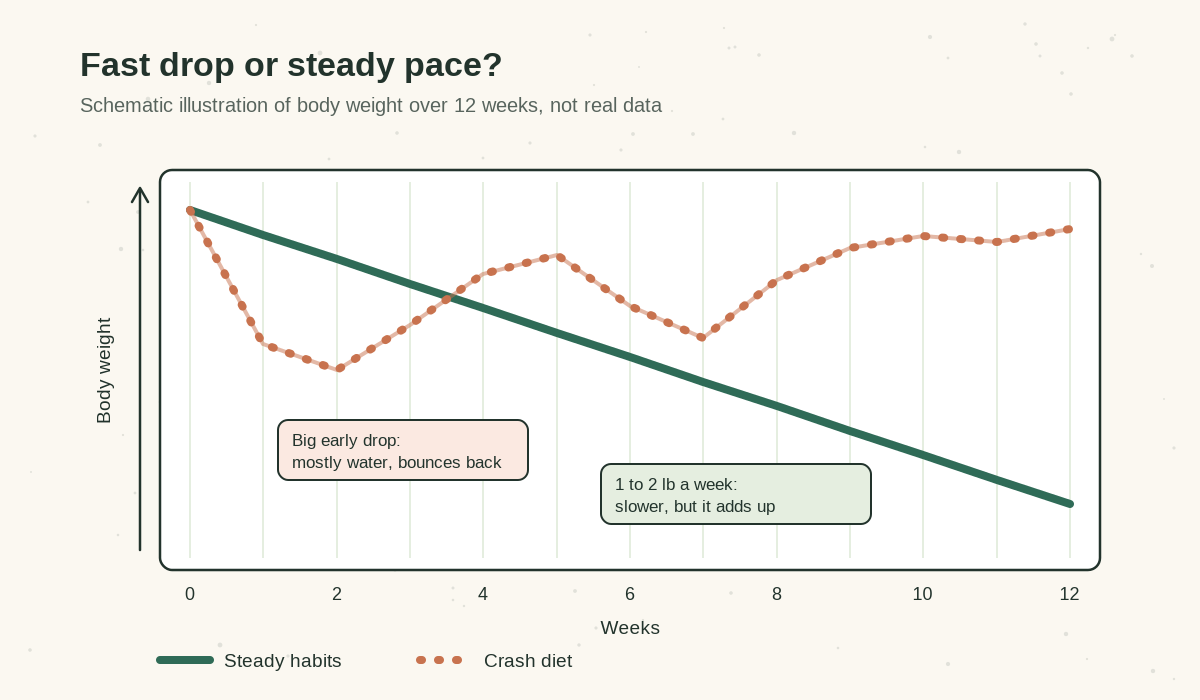
So where does a big first-week drop come from? Your muscles and liver store carbohydrate as glycogen, and every gram of glycogen is stored together with several grams of water. Cut carbs or calories sharply and the body uses up that store, and the water goes with it. Less food in your gut and less salt (which makes the body hold water) add a little more. The result can look dramatic on the scale, but it refills within days once you eat normally.
That is why crash diets feel like they work at first and then "stop working." The water weight was never fat, and very low calorie intake makes it hard to keep going.
What a realistic pace looks like
At 1 to 2 pounds a week, you lose about 4 to 8 pounds a month. That sounds slow next to a 10 pound promise, but it adds up: over three months it can be 12 to 24 pounds, and that weight is far more likely to stay off. The NIH Body Weight Planner is a free tool that estimates how many calories you need for a goal weight and timeline, and it accounts for the way the body adapts.
Safety first
- Skip very low calorie diets on your own. Diets under about 800 calories a day should only be done under medical supervision. Risks include gallstones, dizziness and muscle loss.
- No water pills, laxatives or "detox" teas for weight loss. They remove water, not fat, and can cause dehydration and electrolyte problems.
- Talk to your doctor first if you take medication for diabetes or blood pressure (doses may need adjusting as you lose weight), are pregnant or breastfeeding, or have a history of an eating disorder.
- See a doctor promptly if you lose weight quickly without trying, or have fainting, a racing heart, or ongoing dizziness while dieting.
10 honest habits that actually help
- Aim for a modest calorie gap. A daily deficit of roughly 500 calories, from food and movement combined, is the usual starting point for about a pound a week. That might be a smaller dinner portion plus a daily walk, not a starvation plan.
- Build meals around protein and vegetables. Protein (eggs, beans, fish, chicken, Greek yogurt, tofu) and fiber-rich vegetables keep you full for longer. Fill half the plate with vegetables, a quarter with protein, a quarter with whole grains or potatoes.
- Drink water instead of calories. Soda, sweet coffee drinks, juice and alcohol add calories without making you feel full. Swapping just one sugary drink a day for water or unsweetened tea can make a real difference over months.
- Slow down at meals. Eating without screens and putting your fork down between bites gives your body time to register fullness. Our guide to mindful eating walks through it step by step.
- Walk more, every day. Walking is free, low risk and easy to repeat. Start where you are, then add 5 to 10 minutes a week. Even short sessions count, as explained in how a little exercise goes a long way.
- Add strength training twice a week. Bodyweight squats, wall push-ups and rows with a backpack help you keep muscle while you lose weight. Federal guidelines recommend muscle strengthening on at least two days a week.
- Protect your sleep. Short sleep is linked to more hunger and more snacking. Most adults need at least 7 hours a night. A regular bedtime and a phone-free last half hour help more than any supplement.
- Plan the week, not just the day. Decide on a few dinners ahead, keep easy snacks like fruit, yogurt or nuts within reach, and shop with a list. Most diet slips happen when you are hungry and have no plan.
- Watch liquid and weekend calories. Many people eat well Monday to Friday and undo it on the weekend. You do not need to be perfect, just aim for weekends that look roughly like weekdays.
- Track trends, not single days. Weigh yourself at the same time a few days a week and look at the weekly average. Daily numbers jump by a pound or two from water and salt alone, which says nothing about fat.
If you have an event coming up
Want to feel lighter for a wedding or trip next week? Eat a bit less salt and ultra-processed food, drink enough water, cut back on alcohol, get good sleep and go for daily walks. You may feel less bloated and more energetic. Just know the scale change is mostly water, and do not starve yourself to get there.
What to expect in the first month
Week one often shows the biggest number, because of the water effect described above. Weeks two to four usually slow down to the 1 to 2 pound range, sometimes less. Plateaus are normal: water shifts, hormones and a heavier training day can hide fat loss on the scale for a week or more. If the weekly average has not moved for three or four weeks, look honestly at portion sizes and weekend eating before cutting calories further.
Other signs of progress are often more motivating than the scale: clothes fit looser, stairs feel easier, sleep and energy improve. Many people find it helps to measure their waist once a month.
When to get help
A doctor or registered dietitian can help if you have a lot of weight to lose, have tried many times without success, or have conditions such as diabetes, high blood pressure or sleep apnea. They can check for medical causes of weight gain, review medications that affect weight and discuss options that go beyond lifestyle changes.
Frequently asked questions
Is it dangerous to lose 10 pounds in a week?
Losing that much through severe calorie restriction, fasting, sweating or water pills can cause dehydration, dizziness and electrolyte problems, and very fast loss raises the risk of gallstones. A big first-week drop at the start of a sensible plan is usually just water and not a concern in itself.
How much weight can I realistically lose in a month?
For most adults, about 4 to 8 pounds (roughly 2 to 3.5 kg) is a realistic and safe range, a bit more at the very start because of water loss.
Do detox waters or teas speed things up?
No drink melts fat. Flavored water can help if it replaces soda, which is a real benefit. Laxative "detox" teas only cause water loss and can be harmful.
Sources
- Centers for Disease Control and Prevention: Losing Weight, Healthy Weight and Growth
- National Institute of Diabetes and Digestive and Kidney Diseases (NIH): Body Weight Planner
- National Institute of Diabetes and Digestive and Kidney Diseases (NIH): Very Low Calorie Diets
- US Department of Health and Human Services: Physical Activity Guidelines for Americans, 2nd edition
- Mayo Clinic: Weight loss, 6 strategies for success
Comments
No comments yet. Tried this at home? Tell us how it went.