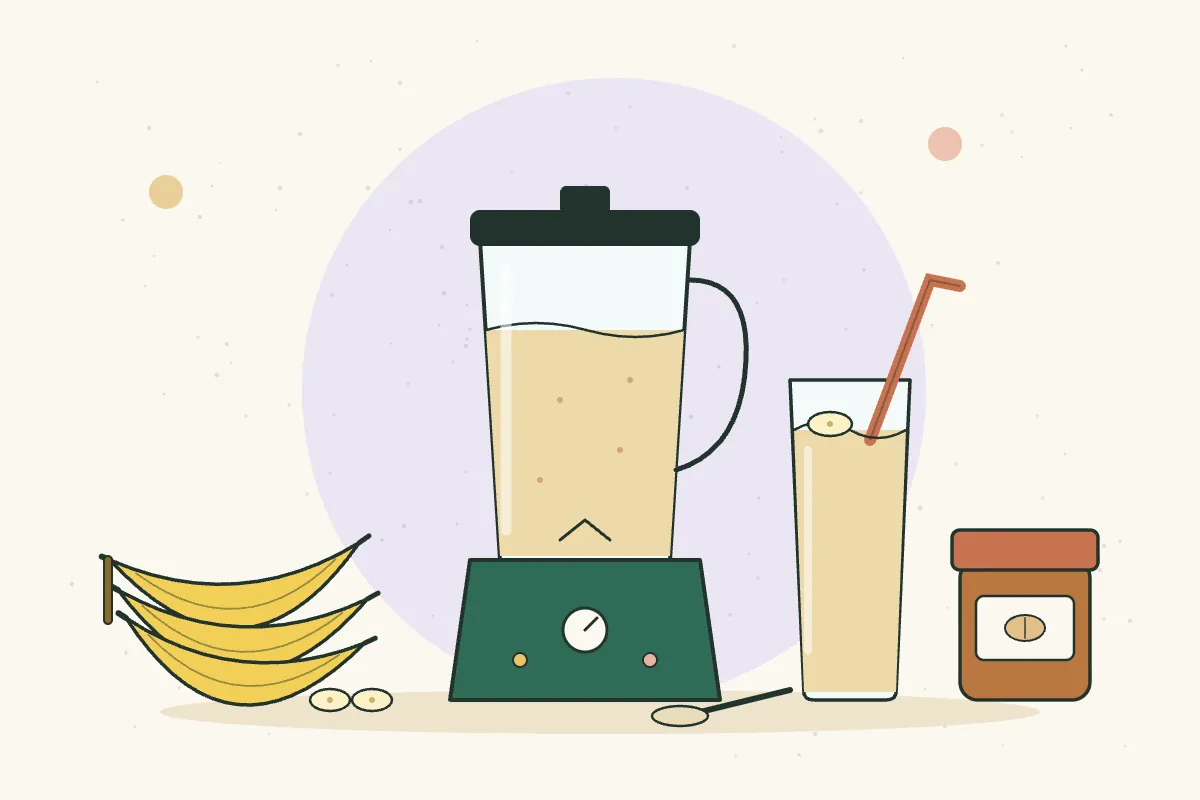
No smoothie burns belly fat, banana or otherwise. What a well-built banana smoothie can do is keep you full for hours, which makes it a useful breakfast if you are trying to eat a little less overall. The trick is protein and fiber: Greek yogurt, milk, peanut butter and oats turn a quick fruit drink into a real meal with roughly 30 grams of protein. The recipe below takes five minutes, and the variations cover dairy free, extra greens and chocolate.
The short version
- Blend 1 frozen banana, 3/4 cup Greek yogurt, 3/4 cup milk, 1 tablespoon peanut butter and 2 tablespoons oats.
- One large glass has roughly 430 calories, about 28 to 30 g of protein and around 6 g of fiber.
- Protein and fiber are what make it filling. Fruit-only smoothies tend to leave you hungry soon after.
- Spot reduction does not exist: belly fat goes down only with overall fat loss, through diet, activity and time.
High-protein banana smoothie recipe
Makes 1 large serving (about 16 oz or 475 ml). Double it for two.
Ingredients
- 1 medium ripe banana, peeled, cut in chunks and frozen
- 3/4 cup (170 g) plain nonfat or low-fat Greek yogurt
- 3/4 cup (180 ml) low-fat milk or unsweetened soy milk
- 1 tablespoon (16 g) natural peanut butter
- 2 tablespoons (10 g) old-fashioned rolled oats
- 1 teaspoon chia seeds or ground flaxseed, optional
- A pinch of cinnamon and 3 or 4 ice cubes, optional
Method
- Start with the liquid. Pour the milk into the blender first. It helps the blades catch and stops the yogurt from sticking to the bottom.
- Add oats and seeds. Pulse the oats, chia or flax with the milk for a few seconds. This keeps the smoothie from tasting grainy.
- Add the rest. Add the yogurt, peanut butter, frozen banana, cinnamon and ice.
- Blend until smooth. Start low, then go high for 30 to 45 seconds. Add a splash more milk if it is too thick to pour.
- Drink it fresh. The oats and chia keep absorbing liquid, so the smoothie gets thicker if it sits. If you prep it the night before, stir in a little milk in the morning.
Why frozen banana
Peel ripe bananas, break them into chunks and freeze them flat in a bag. Frozen banana makes the smoothie thick and cold without watering it down with lots of ice, and the riper the banana, the less you will miss added sweeteners. Bananas with brown spots are perfect.
Nutrition at a glance
Values are approximate and depend on the brands you use. With nonfat Greek yogurt and low-fat milk, one serving comes to about:
- Calories: about 430
- Protein: about 28 to 30 g, mostly from the yogurt and milk
- Fiber: about 6 g, from the banana, oats, peanut butter and seeds
- Added sugar: none, if you use plain yogurt and unsweetened milk
Flavored yogurts and sweetened plant milks can add 10 to 20 grams of sugar per serving, so check the labels.
Variations
Dairy free
Replace the Greek yogurt with 1/2 cup (about 125 g) silken tofu and use unsweetened soy milk. Soy is the plant milk closest to cow's milk in protein. Almond and oat milks are much lower in protein, which makes the smoothie less filling.
Chocolate peanut butter
Add 1 tablespoon unsweetened cocoa powder. It tastes like a milkshake and adds a little fiber.
Green banana smoothie
Add a large handful (about 1 cup or 30 g) of baby spinach. You will barely taste it. For a full week of green recipes, see our green smoothie week plan.
With protein powder
If you prefer, swap the Greek yogurt for 1 scoop of unflavored or vanilla protein powder plus 1/2 cup more milk. Protein powders are dietary supplements, which the FDA does not approve before they are sold, so choose one that has been checked by an independent testing program such as NSF or USP.
What about belly fat?
The idea that a specific food melts fat from your midsection is one of the most persistent myths online. Studies on "spot reduction" consistently show that you cannot choose where your body loses fat. Losing belly fat means losing body fat overall, and that comes from a modest, sustained calorie deficit, regular physical activity, enough sleep and limiting alcohol.
Where this smoothie genuinely helps is fullness. Protein is the most satiating of the three macronutrients, and fiber slows digestion. A breakfast with a solid amount of both tends to keep people satisfied until lunch better than a pastry or a fruit-only smoothie with the same calories. If that means fewer snacks before noon, it adds up over weeks. Paying attention to how full you actually feel is part of that, and our guide to mindful eating has practical ideas.
One honest caveat: at around 430 calories this is a full meal, not a drink on the side. If you have it alongside a regular breakfast, it adds calories rather than replacing them.
Safety first
- Allergies: peanut butter, milk and soy are common allergens. Sunflower seed butter is a good swap for peanut butter.
- Kidney disease: bananas, yogurt and milk are rich in potassium and phosphorus. If you have chronic kidney disease or have been told to limit potassium, check with your doctor or dietitian first.
- Diabetes: the smoothie contains about 50 g of carbohydrate. Count it in your meal plan. Protein, fat and fiber slow the rise in blood sugar compared with juice, but it is not a free food.
- Medical weight loss: if you have a lot of weight to lose, are pregnant, or take medication for weight or diabetes, plan changes with your doctor or a registered dietitian.
Frequently asked questions
Can I make it without a high-speed blender?
Yes. Let the oats soak in the milk for 10 minutes first, cut the frozen banana into small pieces, and blend a little longer. A regular blender handles this recipe fine.
Is it OK to have this smoothie every day?
For most healthy adults, yes. It is a balanced breakfast. Rotating in other breakfasts now and then gives you a wider range of nutrients.
Can I use a fresh banana instead of frozen?
Yes, add 4 to 5 ice cubes to make it cold and thick. The texture will be a little lighter.
Sources
- USDA FoodData Central: Bananas, raw; Yogurt, Greek, plain, nonfat
- Dietary Guidelines for Americans
- US Food and Drug Administration: Questions and Answers on Dietary Supplements
- National Kidney Foundation: Potassium and Your CKD Diet
- Harvard T.H. Chan School of Public Health, The Nutrition Source: Protein
Comments
No comments yet. Tried this at home? Tell us how it went.